
What Is Sports Vision Training? How It Gives Athletes an Edge

Sports vision training is a structured program that strengthens the visual skills athletes rely on in competition: reaction time, eye tracking, peripheral awareness, and depth perception. Just like the muscles you build in the weight room, your eyes and brain can be trained to take in and process what is happening on the field faster and more accurately. The result is an athlete who sees the play develop sooner and reacts a step ahead of everyone else.
Almost everything that happens in sport starts with the eyes. A hitter picking up the spin of a pitch, a point guard reading a lane before it opens, a goalkeeper tracking a shot through traffic. Every one of those moments is a visual skill in action. Sports vision training builds those skills on purpose, instead of leaving them to chance.
The visual skills athletes train
Sports vision training targets a specific set of measurable skills:
Reaction time — how quickly you respond to what you see.
Eye tracking — keeping your eyes locked on a fast-moving target, like a ball or an opponent.
Peripheral awareness — noticing more of the field or court without turning your head.
Depth perception — judging distance and closing speed accurately.
Visual processing speed — how fast your brain makes sense of what your eyes take in.
Contrast sensitivity — picking out detail in tricky light or against busy backgrounds.
Each of these can be tested, given a baseline, and improved with the right training.
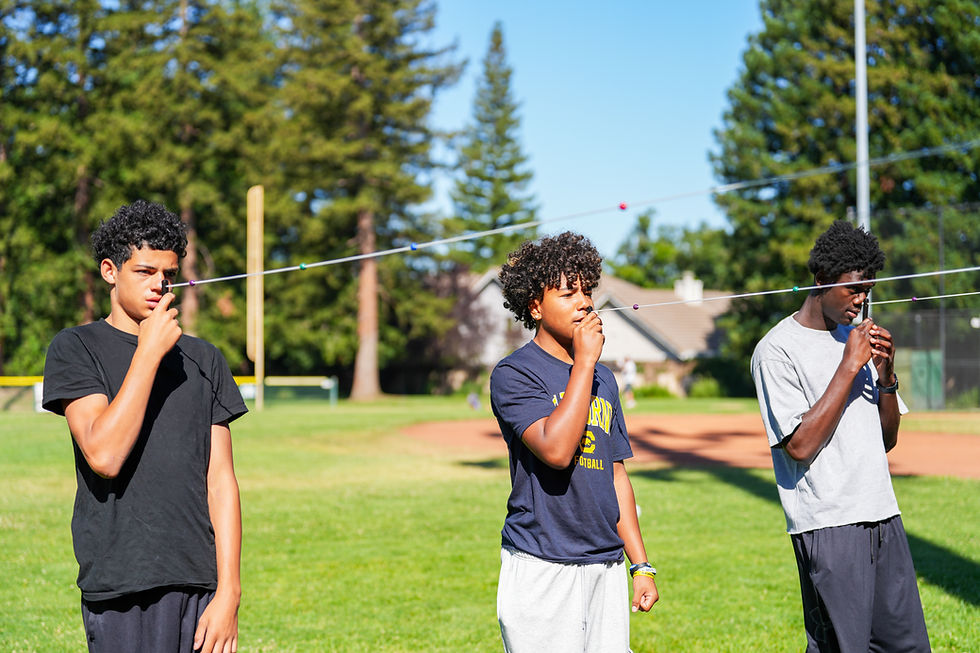
How sports vision training works
It starts with an assessment. Every athlete begins with a comprehensive evaluation of their visual system: eye tracking, dynamic acuity, depth perception, peripheral awareness, reaction time, and processing speed. That produces a Visual Performance Profile, a clear picture of where you are strong and where there is room to grow.
From there, training is personalized. Drills are built from your assessment results and progress as you improve, some in the clinic with a performance team and some as take-home work. Because the visual system is trainable, consistent reps produce real, measurable change. Athletes retest along the way, so progress is tracked with data, not guesswork.
Is it the same as an eye exam?
No. A standard eye exam checks whether you can see clearly, measuring your 20/20 acuity. Sports vision training assumes you can already read the eye chart and works on something different: how fast and how well you use your vision under the speed and pressure of competition. An athlete can have perfect 20/20 eyesight and still have slow reaction time or weak tracking, and those are exactly the skills that win or lose plays.
How it shows up across different sports
The same underlying visual skills translate to almost every sport. A few examples:
Baseball and softball — picking up pitch spin earlier and tracking the ball all the way to contact.
Basketball — reading passing lanes and reacting to a defender's first move.
Soccer — wider field awareness and quicker decisions with the ball at your feet.
Volleyball — tracking a fast serve and timing the block or the dig.
Tennis — judging the ball off the racket and adjusting a split second sooner.
If a sport rewards seeing something and reacting to it quickly, and nearly all of them do, trained vision is an advantage.
Who sports vision training is for
Youth and student athletes (ages 8+) — building a visual foundation early.
High school and college athletes — chasing a starting spot or a roster offer.
Elite and professional athletes — hunting the last few percent of performance.
Teams and clubs — testing a whole roster in a single day.
Athletes returning from concussion — rebuilding visual skills safely before returning to play.
What results look like
Because everything is measured, improvement is visible. Athletes leave with a baseline, train against it, and retest to see the change: faster reaction times, steadier tracking, sharper awareness. On the field, that shows up as reading plays sooner, reacting quicker, and making cleaner decisions when the game speeds up.
How long does it take?
Vision is a skill, so it responds to consistent practice over time rather than a single visit. Training is typically structured in focused blocks, often 8 to 12 weeks, with retesting built in so athletes and families can see measurable progress along the way. The right first step for every athlete is an assessment, which sets the baseline and shapes the plan.
Ready to see where your visual skills stand? Every athlete starts with a comprehensive Elite Vision Assessment. Book yours today and get a clear picture, and a clear plan, for training your vision.
Frequently Asked Questions
What is sports vision training in simple terms?
It is training that improves how quickly and accurately an athlete sees and reacts during competition, including reaction time, tracking, awareness, and depth perception.
Do I need glasses or a vision problem to benefit?
No. Sports vision training is for athletes who already see well but want to use their vision faster and more effectively under pressure.
What age can an athlete start?
Athletes as young as 8 can begin building foundational visual skills, and training scales all the way up to elite and professional levels.
How long before I see results?
Training is typically structured in 8- to 12-week blocks, with retesting to track measurable progress.
Is sports vision training backed by research?
Yes. A growing body of research supports vision training as a way to improve sport-relevant visual skills. Our next post looks at the science in detail.

Comments